
Sydney’s property market is slowing as buyers retreat and interest-rate concerns grow. However, affordable homes and selected suburbs continue to outperform.

Sydney’s property market is slowing as buyers retreat and interest-rate concerns grow. However, affordable homes and selected suburbs continue to outperform.
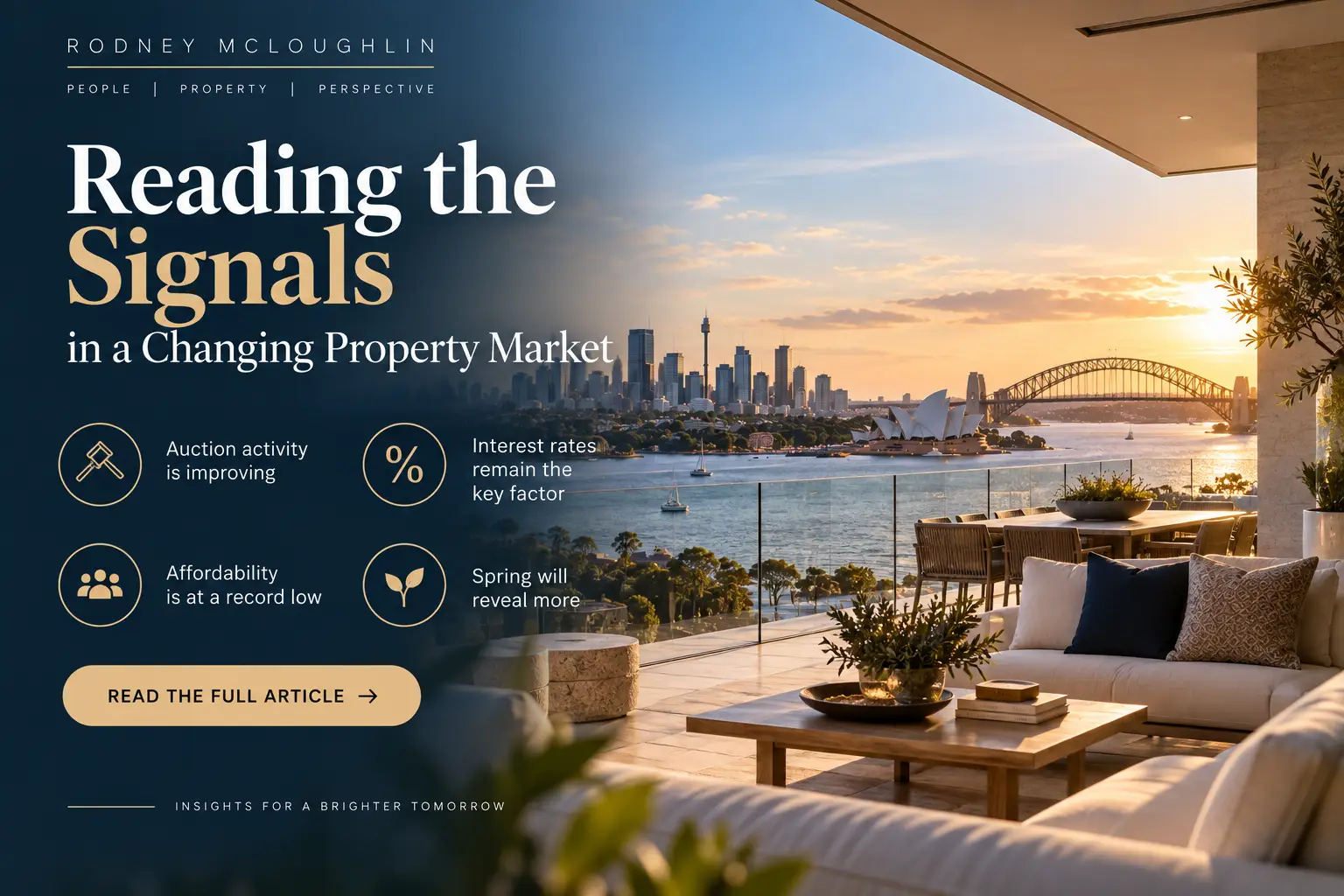
Rodney McLoughlin examines the Australian property market outlook and the key signals that could reveal the next turning point.
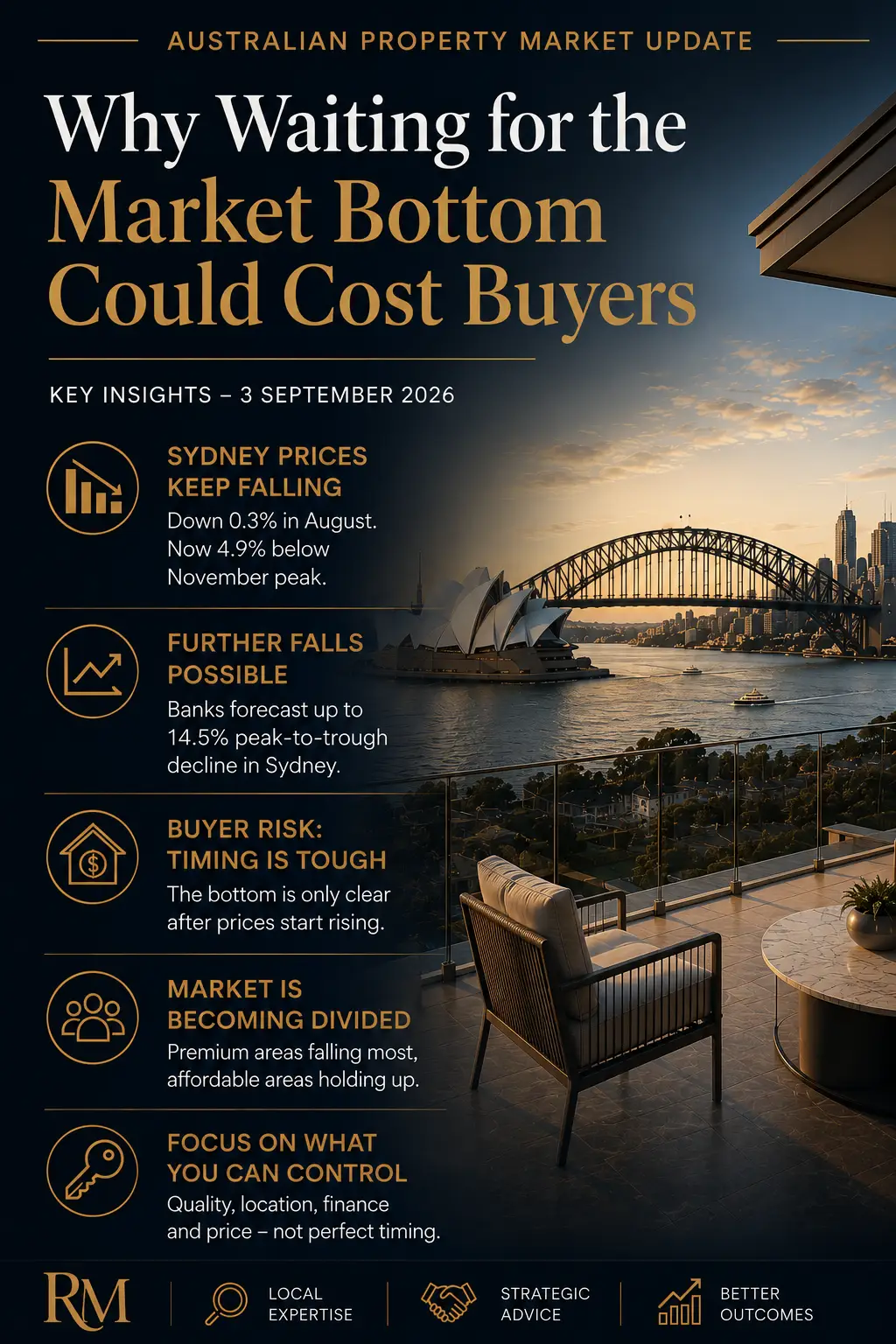
Sydney prices are falling, but waiting for the bottom carries risks. Rodney McLoughlin explains why today’s buyer advantage matters.
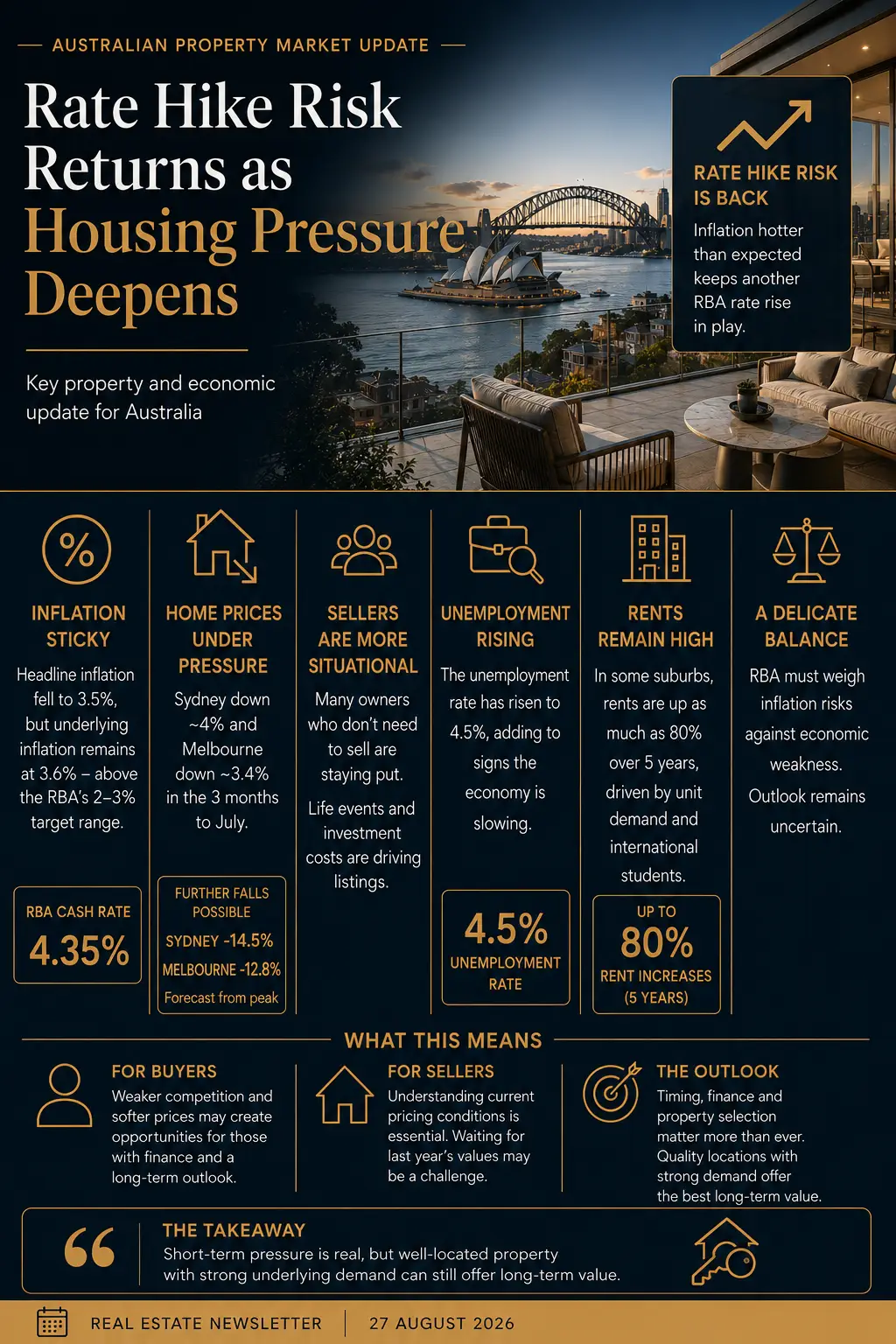
Rate hike risk is back as housing pressure deepens. Rodney McLoughlin explains what this means for buyers, sellers and renters.

Investors retreat as Sydney rents rise and buyers gain leverage. Rodney McLoughlin explains the changing Australian property market.

Australian property prices face further pressure as rates remain high. Rodney McLoughlin looks at what comes next for buyers and sellers.

Australia's property market is shifting into a buyer's market. Rodney McLoughlin explains what falling prices mean for buyers and sellers.

Rodney McLoughlin explains how interest rates, buyer caution and changing market conditions are shaping Australian real estate.
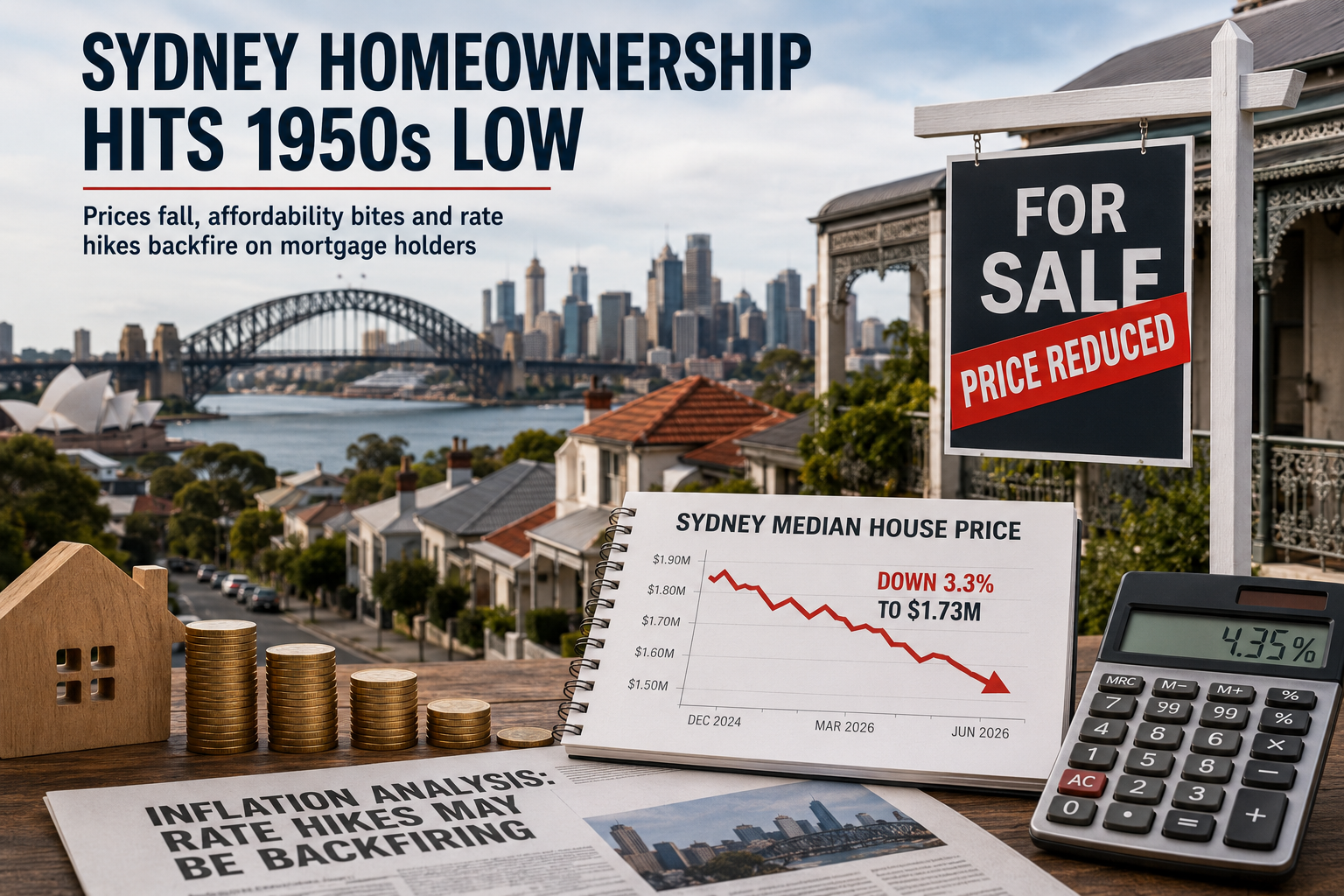
Rodney McLoughlin explains Sydney’s property market shift as prices fall, buyers gain power and homeownership reaches a 70-year low.

Rodney McLoughlin shares this week's Australian property market update covering interest rates, Sydney prices and buyer opportunities.
Compare listings
Compare