

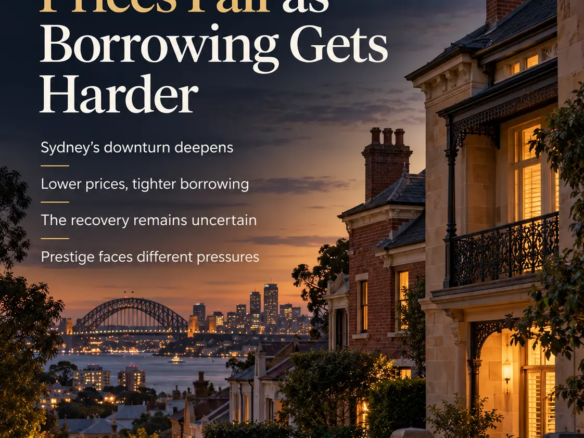
Sydney’s housing market is showing clear signs of strain as rising interest rates, proposed negative gearing and capital gains tax reforms, growing investor uncertainty and a shortage of new housing combine to create one of the most challenging market environments in recent years.
Recent data shows Sydney home prices have now fallen for three consecutive months, with values down 2 per cent in May and continuing to drift lower from their February peak. Auction clearance rates have weakened, buyer confidence has softened and a growing number of properties are sitting unsold for months.
Negative Gearing and CGT Changes Fuel Investor Retreat
One of the biggest concerns emerging across the market is the Federal Government’s proposed changes to negative gearing and capital gains tax concessions.
While economists expect the direct impact on prices to be modest, investor sentiment has already shifted dramatically. Property owners are questioning future returns as rising interest rates combine with reduced tax incentives and increasing holding costs.
Buyers’ agents and property advisers are reporting that many investors are delaying purchases or exiting the market altogether, creating additional pressure on already weakening conditions.
Listings Surge as Buyers Step Back
New research from SQM shows properties remaining on the market for more than six months increased by over 10 per cent nationally in May, with Sydney recording one of the sharpest increases.
Experts say the rise reflects nervous buyers, stubborn sellers and changing market conditions.
As borrowing power declines and uncertainty increases, buyers are taking longer to make decisions. Properties that may have sold quickly during the strong market conditions of 2025 are now sitting unsold, forcing many vendors to reconsider pricing expectations.
Housing Supply Crisis Continues
Ironically, while investor demand is weakening, Australia’s housing shortage continues to worsen.
New data shows almost 490,000 migrants arrived in Australia over the past year while only 174,500 homes were completed. That means population growth is running at almost three times the rate of housing supply.
This imbalance continues to support long-term housing demand and remains one of the strongest arguments against any significant property market correction.
First Home Buyers Face Growing Risks
The softer market is also creating concerns for first-home buyers who entered the market using low-deposit government schemes.
Industry experts warn that continued price falls could leave some recent buyers exposed to negative equity, where mortgage balances exceed property values.
While widespread negative equity remains unlikely, it highlights the risks of purchasing during periods of economic uncertainty and rapidly changing policy settings.
What Happens Next?
The next move from the Reserve Bank may prove critical.
Some economists now argue further rate rises risk pushing the economy toward recession, while others continue to warn inflation remains a concern.
For property owners, investors and buyers, the coming months are likely to be defined by uncertainty. However, history shows that markets eventually adjust and opportunities emerge for those who understand local conditions and remain focused on long-term fundamentals.
Rodney McLoughlin continues to monitor these developments closely, helping clients navigate changing market conditions and identify opportunities in an increasingly complex property landscape.
Real Estate Newsletter
This article is a curated summary of various news stories from the past week, offering insights and updates on the real estate market. 12 June 2026.
Rodney McLoughlin is a trusted real estate professional with deep insights into the Australian property market. For personalized advice and market expertise, reach out to Rodney today.



Join The Discussion