
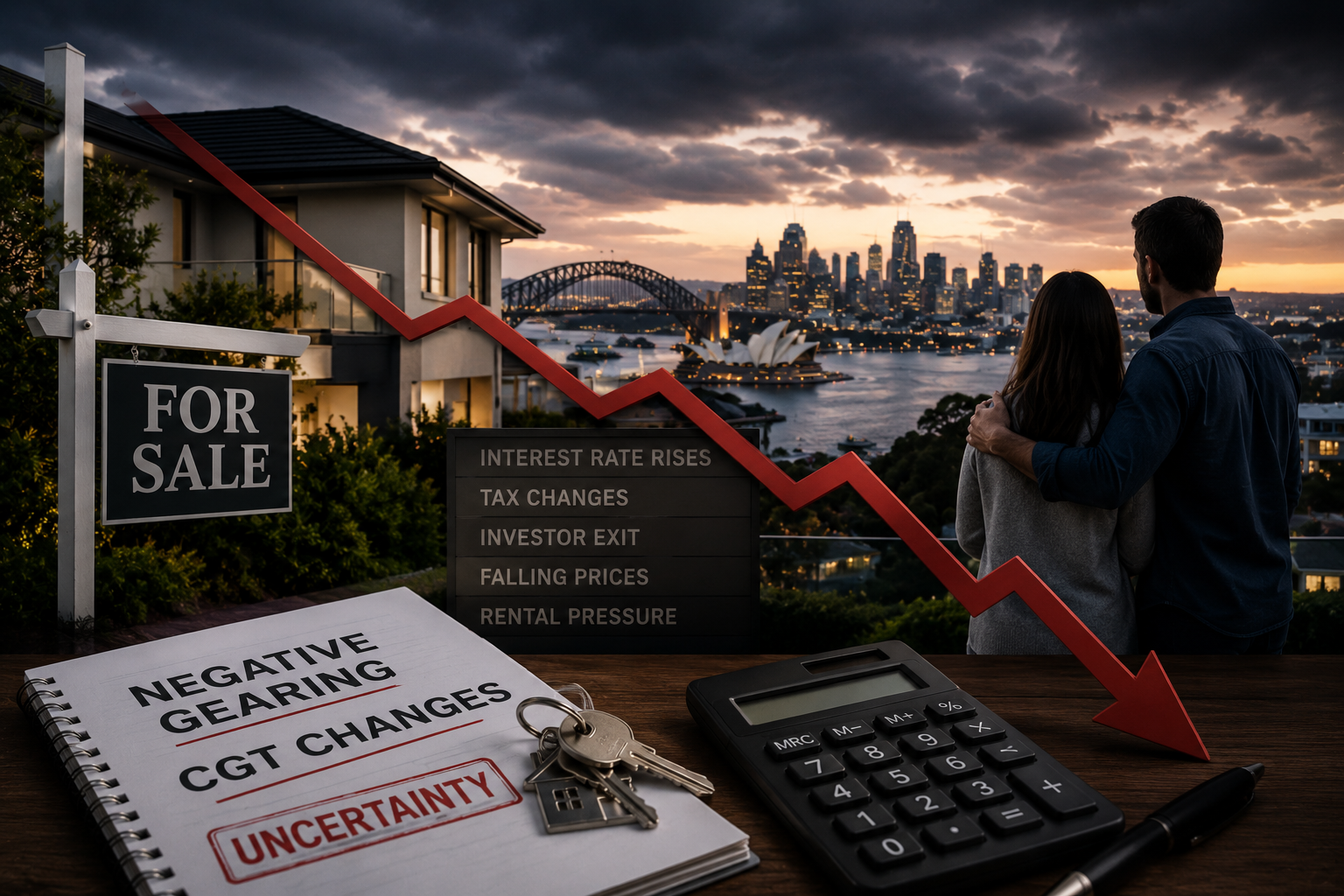
Sydney’s property market is facing mounting pressure as rising interest rates, proposed changes to negative gearing and capital gains tax concessions, and weakening buyer confidence combine to reshape the housing landscape.
The latest PropTrack data revealed Sydney home prices fell a further 2 per cent in May, marking the third consecutive monthly decline. Since peaking in February, values have continued to soften, particularly across premium suburbs where borrowing costs have the greatest impact on purchasing power.
While interest rate rises have been the immediate catalyst, many investors are increasingly concerned about the Federal Government’s proposed changes to negative gearing and capital gains tax concessions.
Negative Gearing and CGT Changes Spark Investor Exodus
The proposed reforms, due to commence in July 2027 if legislated, would apply to established investment properties while exempting newly built homes.
REA Group modelling suggests the changes could reduce property values by up to 5 per cent over the longer term compared to where prices would otherwise be. While economists expect the impact to be gradual, investor sentiment has already shifted.
Many property owners are questioning the future attractiveness of residential investment as higher holding costs, rising interest rates and reduced tax incentives combine to erode returns.
For investors, the concern is not just today’s market conditions but what the investment landscape may look like over the next decade.
Rental Market Could Feel the Impact
As investors retreat, concerns are growing about future rental supply.
Treasury modelling has already forecast rent increases as a consequence of the proposed tax reforms. While economists expect the national impact to be modest, even small increases could place additional pressure on renters in an already undersupplied market.
With vacancy rates remaining low across many Sydney suburbs, any reduction in investor activity could further tighten rental availability.
First Home Buyers Face New Risks
At the same time, questions are emerging around the long-term impact of expanded low-deposit government schemes.
Industry commentators have warned that some buyers who entered the market with just a 5 per cent deposit could face negative equity if prices continue to decline. In simple terms, this means owing more on a mortgage than the property is worth.
Although widespread negative equity remains unlikely, the combination of falling prices, higher repayments and weaker buyer demand is creating a more challenging environment for recent purchasers.
What Happens Next?
The direction of Sydney’s market will largely depend on future Reserve Bank decisions, inflation outcomes and how investors respond to the proposed tax changes.
While a major housing crash remains unlikely, the market is clearly entering a new phase. Investors are becoming more selective, buyers are more cautious, and affordability pressures remain front and centre.
For those navigating these changing conditions, local market knowledge and strategic advice have never been more important. Rodney McLoughlin continues to monitor these developments closely, helping clients understand the opportunities and risks emerging across the Australian property market.
Real Estate Newsletter
This article is a curated summary of various news stories from the past week, offering insights and updates on the real estate market. 5 June 2026
Rodney McLoughlin is a trusted real estate professional with deep insights into the Australian property market. For personalized advice and market expertise, reach out to Rodney today.




Join The Discussion